Gillman
05-20-2007, 09:55
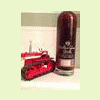
Recently I bought an extra-large bottle of WR, the one with the Derby horse motif. I found the whiskey middling, showing some of the acetone-like traits another poster mentioned recently. (I have found that bourbons packaged in extra-large bottles are not generally to my taste, I wonder if specialty and large packages are reserved for the slightly less good stuff).
So I bought a standard-size bottle of WR and this one was much better I thought, showing the typical "burned cherrywood" nose and taste. It had little of the acetone-like edge of the other one. However, the body of the smaller bottle seemed a bit lacking and the flavour a bit sharp. So I vatted the two bottles and tried different proportions.
It is interesting (I find) how the different combinations were noticeably different in nose and taste. Finally I hit on the perfect combination or rather two: by adding some of each bottle to the other, I now have two bottles of WR that really please me. The large bottle's acetone flavor is much diminished, filled out by the wood and cherry of the other. And the smaller bottle is fuller-tasting and smoother all round than it was before - maybe it needed a little congener.
WR is comprised (Chuck Cowdery was the first to mention this) of, I understand, whiskeys of 4 ages or lots, two from Versailles and two from the main plant of B-F, used in varying proportions to obtain the desired profile.
So I've stayed of course with the same approach but have obtained a particular complexity and balance that I like by working with twice the number of the variables (which inevitably won't have been exactly the same, e.g., the older WR pot still element in the one bottle probably was slightly different from the one in the other bottle, etc.).
From having two bottles of something decent that I wasn't completely happy with, I now have two still somewhat different things I am really happy with. It isn't in my head, I reserved samples of the original contents and comparative tastings show the difference.
Gary
So I bought a standard-size bottle of WR and this one was much better I thought, showing the typical "burned cherrywood" nose and taste. It had little of the acetone-like edge of the other one. However, the body of the smaller bottle seemed a bit lacking and the flavour a bit sharp. So I vatted the two bottles and tried different proportions.
It is interesting (I find) how the different combinations were noticeably different in nose and taste. Finally I hit on the perfect combination or rather two: by adding some of each bottle to the other, I now have two bottles of WR that really please me. The large bottle's acetone flavor is much diminished, filled out by the wood and cherry of the other. And the smaller bottle is fuller-tasting and smoother all round than it was before - maybe it needed a little congener.
WR is comprised (Chuck Cowdery was the first to mention this) of, I understand, whiskeys of 4 ages or lots, two from Versailles and two from the main plant of B-F, used in varying proportions to obtain the desired profile.
So I've stayed of course with the same approach but have obtained a particular complexity and balance that I like by working with twice the number of the variables (which inevitably won't have been exactly the same, e.g., the older WR pot still element in the one bottle probably was slightly different from the one in the other bottle, etc.).
From having two bottles of something decent that I wasn't completely happy with, I now have two still somewhat different things I am really happy with. It isn't in my head, I reserved samples of the original contents and comparative tastings show the difference.
Gary